
 sv
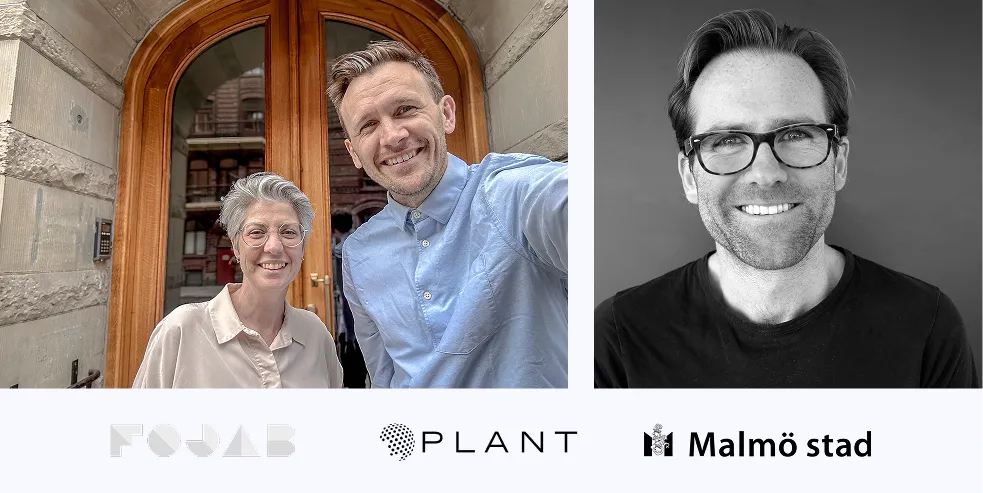
“Calculating buildings’ climate impact during the detailed development planning stage increases our knowledge and understanding of the factors that drive the carbon footprint. The analyses will provide a useful basis for discussions with developers, helping us agree on the measures needed,” says Jan Rosenlöf, Planning Officer and Project Manager for the Urban Planning Department’s climate calculation project in the City of Malmö.
“We need to know how the parameters that the city can influence in a detailed development plan actually affect the carbon footprint. What happens if we change the number of storeys, the building’s geometry or the folds in its envelope?”
A gap in the market
Tools already exist for calculating buildings’ climate impact during early design. Malmö’s Urban Planning Department looked for an equivalent tool for the planning stage that would meet municipalities’ needs, but found none on the market. There was no established method to copy and adopt.
“We discovered a gap,” says Andreas Eggertsen, Climate Strategist at the City of Malmö. “The knowledge exists at the design stage, but not during planning, when a great deal of the carbon footprint is determined.”
Tailored to municipalities
A collaboration was established between the City of Malmö, software company Plant and architecture practice FOJAB. A digital tool is now in place to meet municipalities’ need for early-stage climate calculations: Urban Concept.
FOJAB and Plant have jointly developed Plant’s Concept climate calculation platform further, drawing on FOJAB’s experience and inspiration from early-stage climate analysis, including Leaf Cutter Ant. It connects to the 3D modelling programme Sketchup and can therefore become an everyday working tool for every planning officer in Malmö.
Part of the municipality’s climate work
The City of Malmö has high ambitions for calculating construction-related greenhouse gas emissions during planning. For example, it uses Klimatanalys Stadsdel, IVL Swedish Environmental Research Institute’s tool for calculating carbon footprints at district level based on factors such as land use, traffic patterns and energy consumption.
But that calculation cannot answer every question that arises during planning, says Jan Rosenlöf.
“It is based on standard values for gross floor area, structural materials and energy class. We wanted to go deeper.”
IVL’s Klimatanalys Stadsdel has now been adapted to receive structured data from Urban Concept, allowing the two tools to complement one another.
The method could become standard practice
FOJAB and Plant hope that more municipalities will adopt the approach.
“We are working to make this method standard practice. We hope more municipalities recognise the need to calculate the climate impact of detailed development plans and do so consistently,” says Petra Jenning, Head of Development at FOJAB.
“This is about a new way of working in municipal planning as well as a new tool. We believe early-stage climate calculations will become an important part of sustainable urban development,” says Pelle Tunell, CEO of Plant.
About FOJAB
FOJAB is one of Sweden’s leading architecture practices, with around 170 employees and offices in Malmö, Stockholm, Gothenburg and Helsingborg. At FOJAB, we work towards long-term sustainable development and believe architecture can help solve societal challenges and create value for everyone. We run research and innovation projects in collaboration with external organisations.
About Plant
Plant develops software for climate calculations and analysis in the construction and property sector. Its platform helps contractors, property companies, architects and consultants carry out climate calculations throughout construction, from early design to the completed climate declaration. Plant was founded in 2017 by Pelle Tunell and John Sjulander and is now used by organisations including Skanska, Vasakronan, Norconsult and Besqab.
Plant press contact
Eva-Karin Svan
Tel: 070 858 77 85
Email: eva-karin@plant.se
FOJAB press contact
Frida Roijer
Tel: 072 090 85 10
Email: frida.roijer@fojab.se