
 sv
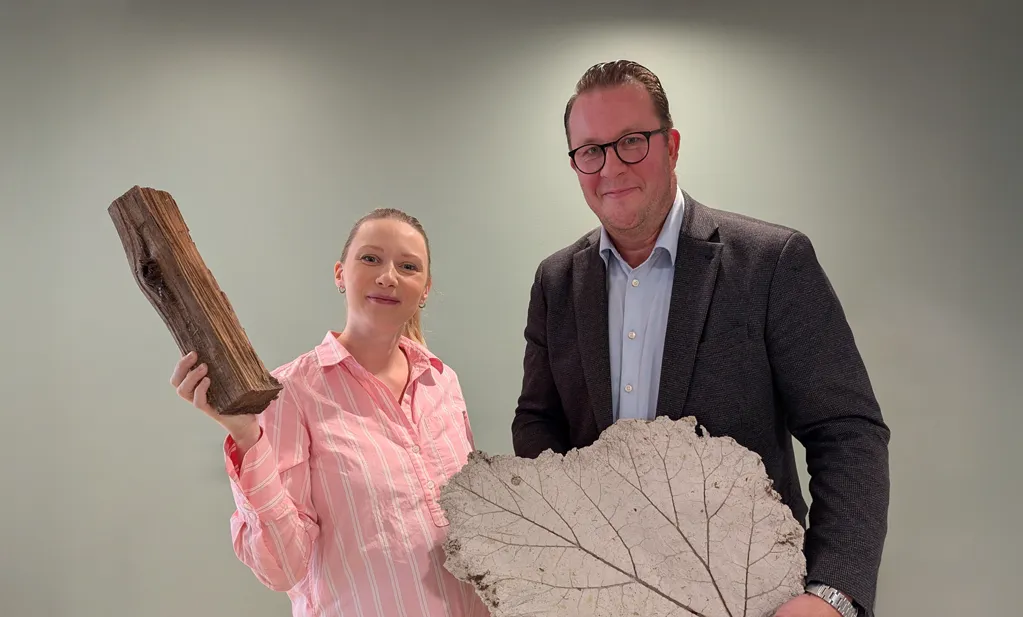
The construction and property industry has traditionally focused on carbon dioxide emissions in life cycle assessments. The new Timber vs Concrete study broadens the perspective by including more environmental impact categories.
For biodiversity impacts, the construction and property industry lacks established methods for quantitative measurement.
“We have now measured building materials’ biodiversity impact using Swedish land data alongside more environmental impact categories to understand the whole picture better. I believe we are the first in the market to do so,” says Astrid Berglund, report author and Sustainability Strategist at software company Plant.
Two almost identical apartment buildings will be built and compared in the study, one with a timber structure and one with a concrete structure.
“In housing, we calculate carbon emissions, but other environmental impact categories, such as biodiversity, have not been calculated for new construction. Since biodiversity is among the most threatened planetary boundaries, we need to add it to our analysis when selecting building materials,” says Patrik Schön, Construction Director at Sveafastigheter.
Housing companies have often focused on increasing biodiversity during property management through measures such as meadow planting and insect hotels. Where building materials’ biodiversity impacts have been studied, analysis has been limited to land use during extraction. Forestry occupies larger areas and has therefore shown a greater impact.
“Using the ReCiPe LCA model, we include more parameters than land use alone. This gives a more comprehensive picture of today’s most common materials and an entirely new result. Plant is now conducting biodiversity life cycle assessments and will include them in our software so buildings can be designed and optimised for biodiversity impact,” explains Astrid.
Chalmers, Plant and Sveafastigheter are participating. The project is the first part of the wider Timber vs Concrete research programme. The second part is expected later in 2025 from IVL Swedish Environmental Research Institute, covering methodological development and a detailed biodiversity study.
“Part one of Timber vs Concrete gives us a solid overview of timber and concrete’s impacts using today’s calculation methods, with timber coming out ahead. We look forward to the deeper biodiversity analysis to see whether the first part’s result holds,” concludes Patrik Schön.
The Timber vs Concrete study and appendices are available here